The Best Wearables for Sleep and Recovery, Chosen by Someone Who Sleeps in Them
The short answer
The best sleep wearable is the one comfortable enough to actually wear to bed, with battery that survives the week. That rules out most smartwatches immediately. My tested pick after 42 consecutive nights: the Hume Band 2.0, screenless, ten-day battery, no required subscription.
Prefer a ring? Oura Ring 4, if you accept its membership. Train seriously? Whoop's recovery analytics remain the deepest, for a yearly price.
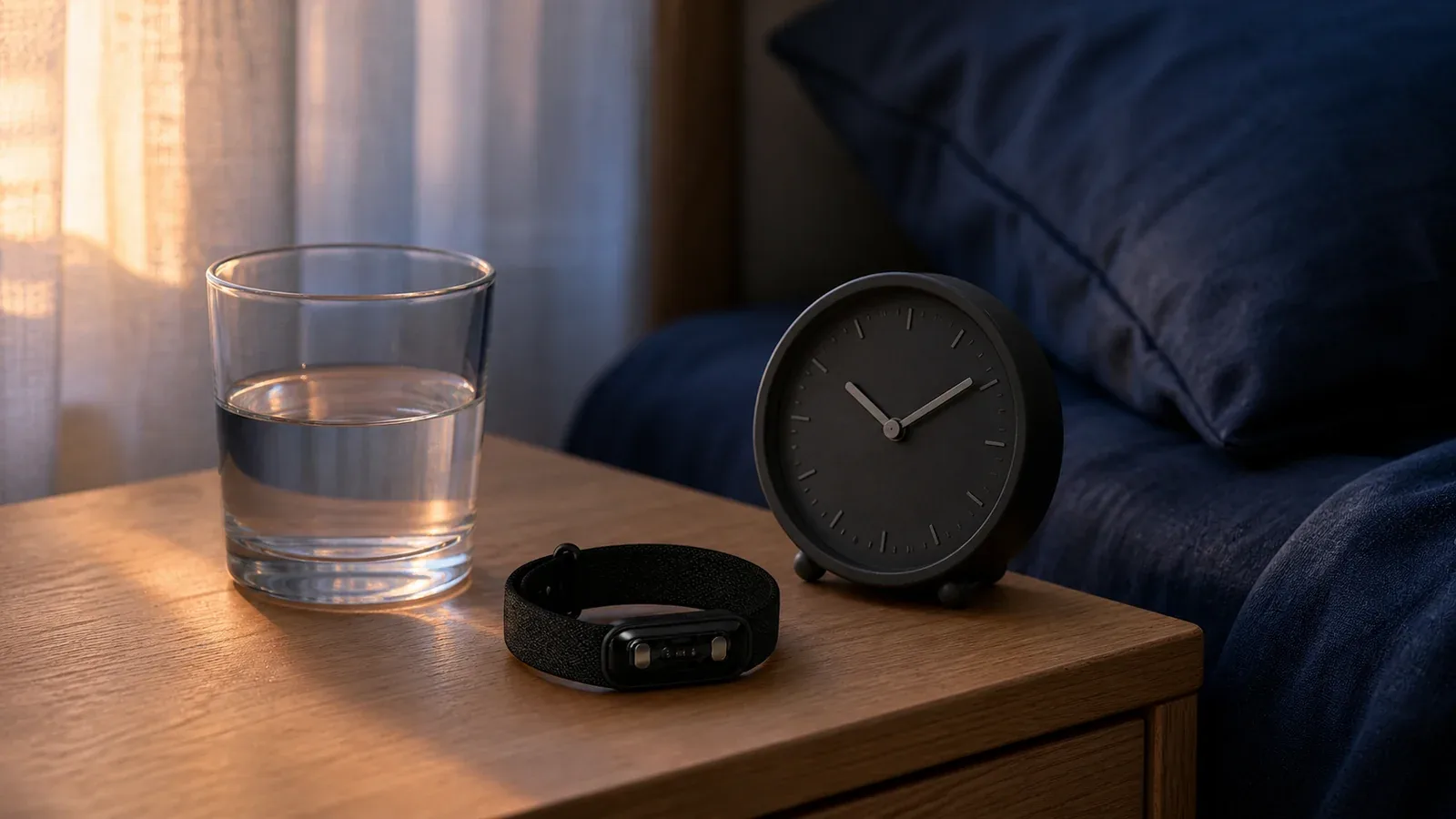
Where sleep tracking is actually decided: not in the spec sheet, on the nightstand.
Sleep tracking has a dirty secret: the hardware barely matters compared to one question nobody puts on the box. Will you actually wear the thing to bed, every night, for months? A device that is annoying at 2 a.m. or dead by Thursday produces no data at all, and no algorithm recovers from that. So this ranking starts where sleep actually happens.
What actually matters in bed (in order)
- Comfort you forget. No screen edges digging in, no weight, nothing that snags the pillow. This is the number one abandonment reason.
- Multi-day battery. A device that charges nightly charges during the exact hours it should be working. Sleep trackers need week-scale batteries.
- No glow. A screen that lights up when you roll over is anti-sleep technology.
- HRV and temperature sensing, the raw material of good recovery scoring.
- The subscription question, which decides what the device costs by year three. Covered in depth in the no-subscription guide.
1. Hume Band 2.0: the tested pick
I wore this band for 42 consecutive nights for my full review, and the sleep-specific findings were simple: it caught bedtime and wake time automatically every single night, its morning recovery score matched felt reality often enough to earn coffee-time attention, and at some point in week one I stopped noticing it existed, which is the entire comfort test. Battery ran 10 to 11 real days, so it never once had to choose between charging and working at night. Sleep stages, HRV, skin temperature and recovery scoring are all on the free tier; the subscription is optional.
Cons, honestly: no screen means checking the app for everything (a feature at 2 a.m., a preference at 2 p.m.), and its training analytics sit below Whoop's, a trade I documented in the comparison.
42 nights tested. Core sleep data free forever. 45-day returns.
2. Oura Ring 4: the ring route
Oura built the category of jewelry that judges your evenings, and the Ring 4 remains its best version: genuinely excellent sleep detection, temperature trends that catch oncoming illness impressively early by owner accounts, and the most invisible form factor made. Two honest frictions: sizing matters and rings bother some people in the gym, and most of the good insights sit behind the monthly membership, which changes the multi-year math substantially. If the ring form is what gets you to actually wear a tracker nightly, it is worth both frictions.
3. Whoop: the athlete's choice
Whoop treats sleep as an input to its real product, recovery and strain coaching, and for people who train hard it remains the deepest system available: sleep debt accounting, strain targets, the works. The band is comfortable, screenless and bed-friendly. The membership is mandatory and the band is inert without it, which is why it ranks here for general sleepers and higher for serious athletes who will use every feature they are renting.
4. Apple Watch: if you already own one
The sleep tracking is respectable and the price, for existing owners, is zero. The problem wears the crown: nightly charging conflicts directly with night wearing. The workaround, charging during the morning routine, works for disciplined people and collapses for everyone else around week three. If you own one, try it before buying anything. If you are buying specifically for sleep, buy something that does not need electricity at bedtime.
How honest are sleep stages, really?
Time for the paragraph most buying guides skip. Every consumer wearable estimates sleep stages from movement, heart rate and temperature, not brainwaves, and against lab polysomnography they all misclassify a meaningful share of stage minutes. What they measure well: total duration, bedtime consistency, awakenings, and night-to-night trends. So read your deep sleep number the way I told Body Pod owners to read body fat: trust directions, not decimals. A falling deep-sleep trend across a stressful fortnight is real information. Tuesday's REM minutes are an educated guess, on every device in this article, at every price.
Frequently asked questions
What's the best wearable for sleep tracking?
A screenless multi-day band or ring you will actually wear nightly. Our tested pick: Hume Band 2.0. Ring alternative: Oura 4, with its membership budgeted.
Are sleep stages accurate?
Duration and consistency, yes. Stage minutes are estimates on all consumer devices. Track the trends, ignore the decimals.
Can I track sleep with an Apple Watch?
Yes, if you solve the nightly-charging conflict with a strict morning-charge habit. Multi-day bands skip the problem.
What is a recovery score?
A composite of HRV, resting heart rate, sleep and often temperature: a morning readiness estimate, useful for easy-day/hard-day decisions, never a medical reading.
Bottom line
Data quality starts with wearing the thing. Screenless, week-long battery, no glow, honest trends: the Hume Band checks every box without a subscription, which is why it is still on my wrist tonight.
Buy for the 2 a.m. test, not the spec sheet. The wearable that disappears on your wrist and survives to Friday will teach you more about your sleep in a month than a fancier one abandoned in a drawer ever will. Mine taught me about the wine. I have almost forgiven it.
Keep reading
 Hume Band 2.0 Review: Six Weeks of Day-and-Night Wear. Worth It?
 The Best Screenless Health Bands of 2026 (It's a Short List)
- Hume Band 2.0: 42 consecutive nights of testing (full review on this site)
- Oura, Whoop, Apple: official specifications, subscription policies and aggregated owner feedback, checked July 2026
- Consumer wearable sleep-staging accuracy limitations reflect published validation study consensus (duration reliable, stages approximate)
- Affiliate relationship with Hume only; no other brand here pays us anything.