The Best Screenless Health Bands of 2026 (It's a Short List, and That's the Story)
The short answer
The best screenless health band for most people is the Hume Band 2.0: sleep, recovery, HRV and heart data with the core app free after purchase, and 10 to 11 real days of battery in my six weeks of wearing one. Whoop is the athlete's pick if you want the deepest training analytics and accept paying a membership every year.
And that is nearly the whole category. Everything else screenless worth considering is a ring, not a band, and rings are a different conversation about fit and fees.

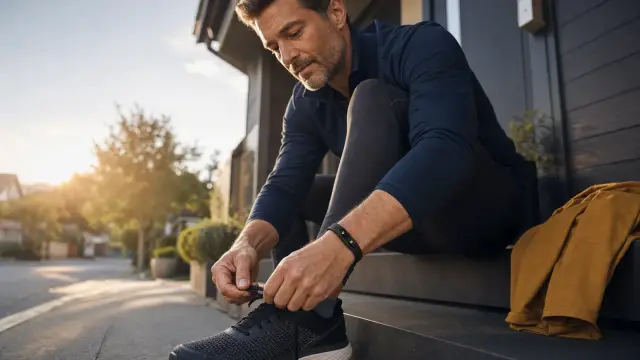
The whole pitch in one scene: the band works, the phone waits.
Most tracker guides assume you want a screen and rank the watches. This one starts from the opposite premise: you have decided the screen is the problem. You want the data collected quietly, all day and all night, and you want to read it once, over coffee, on a device you were already holding. The market for that idea turns out to be surprisingly small, which makes choosing easier than you feared.
Why no screen is the feature, not the compromise
A screen changes what a tracker is. It invites notifications, which invites glancing, which turns a health instrument into a second phone. It also drains the battery, which means nightly charging, which means the device spends the night on a nightstand while your sleep goes unrecorded. Screenless bands flip every one of those defaults: nothing to glance at, nothing glowing at 2 a.m., and battery life long enough that wearing it around the clock is realistic. After six weeks with one on my wrist, documented in the full Hume Band review, the strongest praise I can offer is that I kept forgetting it existed. For a device whose job is continuous measurement, invisible is the highest compliment.
Why this list is so short (a small graveyard)
The screenless band category once looked like a race. Amazon entered with the Halo band, then discontinued the whole line in 2023 and switched the servers off, a useful reminder that a tracker is only as durable as the company behind its app. Others drifted toward screens or toward rings. What survived the shakeout as of July 2026 is essentially two serious wrist options with opposite business models, plus the smart ring category next door. That is not a weakness of this guide. It is the actual state of the market, and pretending there are ten great screenless bands would be filler.
1. Hume Band 2.0: the best screenless health band for most people
The Band is the device in this category I have tested longest: six weeks of continuous day-and-night wear, 42 nights, on the free tier the whole time. It tracks heart rate, HRV, sleep stages, skin temperature, blood oxygen and activity, and builds recovery scores and long-term health trends from them. Battery ran 10 to 11 days per charge in real use against a claimed 14, it shrugged off a forgotten shower thanks to the IP68 rating, and the strap is light enough that sleeping in it stopped registering as a decision by the end of week one.
The business model is the quiet advantage: you buy it once and the core data stays free. An optional premium tier adds AI guidance for around $99 a year, and I never felt cornered into it. The honest cons from my testing: step counts run a little below a phone's, the app occasionally wants a second try to sync, and the "early warning system" framing in Hume's marketing oversells what a wellness band can responsibly claim. List price hovers around $356 with frequent promotions near $249, and it shares its free app with the Hume Body Pod if body composition is part of your picture.
Core data free forever. 45-day return window.
2. Whoop: the athlete's screenless band
Whoop deserves its reputation. Strain scoring, recovery analytics and training guidance sit a clear tier above everyone else's, and if you periodize training or chase performance numbers, the membership can genuinely earn its fee. That fee, though, is the whole decision: Whoop does not work without its subscription, currently in the neighborhood of $199 to $239 a year, forever. I wrote the long version in Hume Band vs Whoop, and the conclusion has not moved: excellence you rent is a different purchase from competence you own. Athletes should shortlist it. Everyone else should do the five-year math first.
The rings next door (screenless, but not a band)
If your objection is to screens rather than to fingers, smart rings solve the same problem in a different shape. The Oura Ring is the polished leader, with the best sleep app in the business and a monthly membership that most of its insights sit behind; I compared it with the Band in Hume Band vs Oura Ring. Newer rings from Samsung, Ultrahuman and others are filling out the category with varying fee models. The honest trade-offs of any ring: sizing matters, lifting weights with metal on your finger takes negotiation, and battery life trails a good band. Rings win on discretion. Bands win in the gym.
Side by side
| Hume Band 2.0 | Whoop | Smart rings (Oura et al.) | |
|---|---|---|---|
| Screen | None | None | None |
| Cost model | Buy once, core data free | Mandatory yearly membership | Purchase plus monthly fee (usually) |
| Battery (real use) | ~10 to 11 days | Multi-day, model dependent | Several days |
| Best for | Everyday health and sleep tracking | Training analytics, athletes | Discretion, sleep-first users |
| Weakness | Step counts run low, app polish | The fee never ends | Gym awkwardness, sizing, fees |
Only the Hume Band was tested hands-on for this guide (six weeks). Whoop and the rings are assessed on published specs, policies and owner feedback, stated plainly so you can weight my words accordingly.
Frequently asked questions
What is a screenless health band?
A wrist tracker with sensors and no display. It measures continuously (heart rate, HRV, sleep, temperature) and you read the results in the app. No notifications, no glow, battery measured in days.
What is the best screenless health band in 2026?
The Hume Band 2.0 for most people: core data free after purchase and 10 to 11 real days of battery in my testing. Whoop for athletes who will actually use its deeper analytics and accept the membership.
Do screenless trackers need a subscription?
Whoop: yes, mandatory. Oura: technically no, practically yes. Hume Band: no, the core data is free after purchase with an optional premium tier.
Are screenless bands better than smartwatches for sleep?
Usually, yes. They are lighter, dark, and charged, which means they are actually on your wrist at night. The best sensor in the world records nothing from a nightstand.
What happened to the Amazon Halo?
Amazon discontinued it in 2023 and shut the service down. Its absence is a big part of why this category now has so few players.
Bottom line
Two bands survived the shakeout, and they split the market cleanly: Hume Band for people who want their health data without a bill or a glow, Whoop for athletes who will mine every layer of its analytics and pay yearly for the shovel.
Buy the quiet device you will actually wear around the clock, because in this category consistency beats specification. Mine is still on my wrist, the recovery score still shows up next to the morning coffee, and my phone remains the only screen in my life that buzzes. That was the whole assignment.
Keep reading
 Hume Band 2.0 Review: Six Weeks of Day-and-Night Wear. Worth It?
 The Best Fitness Trackers Without a Subscription (2026)
- Hume Band 2.0: six weeks of hands-on testing on the free tier (full review on this site)
- Whoop, Oura and other brands: official specifications, pricing and subscription policies, checked July 2026
- Amazon Halo discontinuation: Amazon's 2023 customer notice
- Pricing and policies change; confirm current terms before buying any device on this page.
- We hold an affiliate relationship with Hume only; no other brand here pays us anything.