Hume Body Pod Review (2026): I Tracked My Body on This Smart Scale for 8 Weeks. Here's the Truth
The short answer
The Hume Body Pod is worth it if you're actively trying to change your body (losing fat, building muscle, or both) and you want proof it's working when the scale number refuses to move. The retractable handle gives it something cheap smart scales don't have: sensors for your upper body, not just your feet.
It's not worth it if you only care about your weight, or if you'll obsess over single readings instead of trends. Like every home bioelectrical impedance device, its day-to-day numbers wobble with hydration. Its power is the trend line, not any one morning.
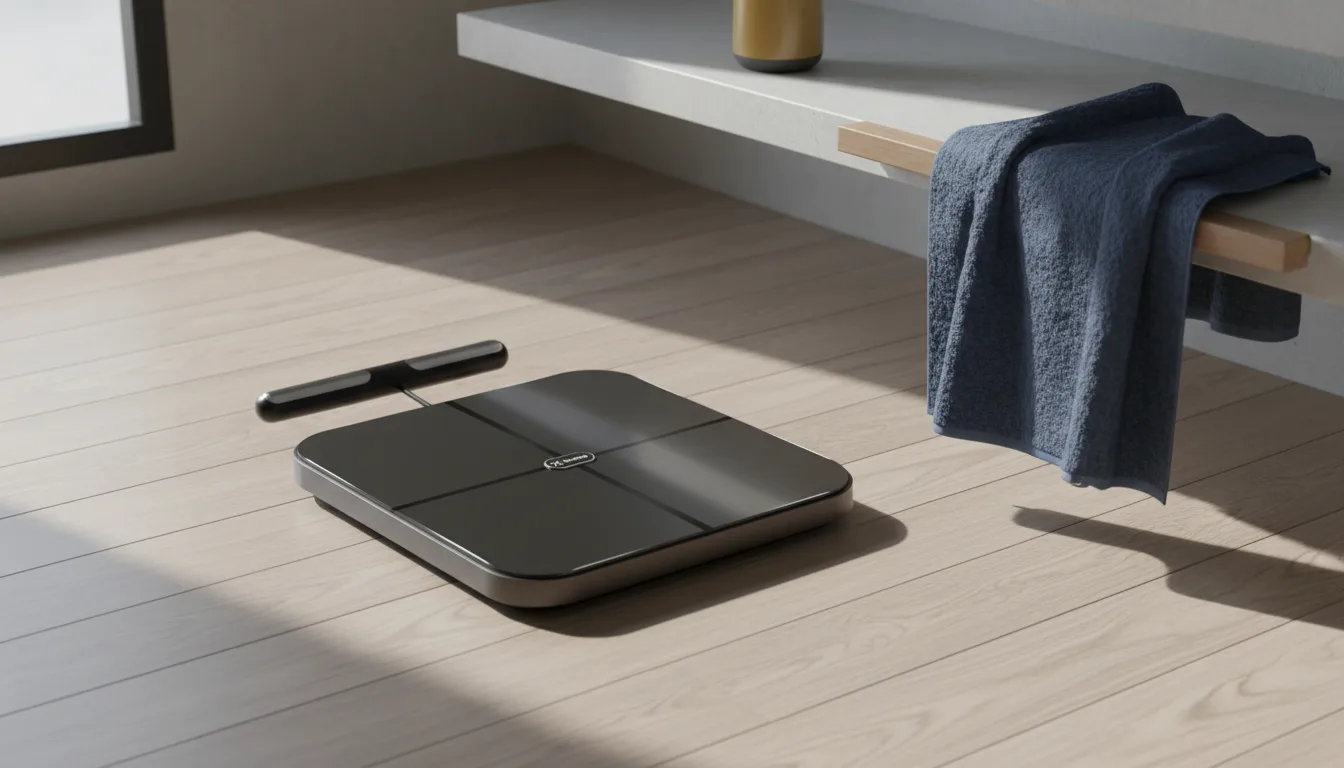
The retractable handle is what separates the Body Pod from foot-only smart scales.
Eight weeks ago my bathroom scale and I were in a stalemate. Six weeks of lifting three times a week, protein at every meal, a modest calorie deficit. And the scale had moved exactly 1.2 pounds. I was either wasting my time or measuring the wrong thing. I ordered the Hume Body Pod to find out which.
Spoiler: I was measuring the wrong thing. But this review isn't a love letter. The Body Pod got several things wrong over those eight weeks, and if you're thinking of buying one, you deserve to know exactly what.
What the Hume Body Pod smart scale actually is
The Body Pod is a smart body composition scale made by Hume Health, a US company focused on metabolic health. It looks like a normal (slightly premium) bathroom scale with one odd feature: a retractable handle on a cord that you pull out and hold during measurement.
That handle is the entire point. Most smart scales under $100 have four electrodes, all under your feet. They send a tiny electrical signal up one leg and down the other, and then estimate everything above your waist. The Body Pod has eight electrodes, four under your feet and four in the handle, so the signal actually travels through your arms, trunk and legs separately. This is called segmental bioelectrical impedance analysis (BIA), and it's the same basic approach used by the professional InBody machines you see in gyms.
One 30-60 second measurement gives you around 45 metrics in the app. The ones that matter most in practice:
- Body fat percentage and fat mass: the number you actually want to go down
- Muscle mass and skeletal muscle: the number you want to protect
- Visceral fat rating: the fat around your organs, worth watching after 40
- Segmental breakdown: fat and muscle for each arm, each leg and your trunk
- Body water, protein, estimated bone mass, BMR and "metabolic age"
It supports up to 24 user profiles, has a stated weight capacity of 181.4 kg (400 lb), and syncs with Apple Health, Google Health Connect, Fitbit and Garmin.
My 8 weeks with it, honestly
Week 1: confusion (and a lesson about salt)
Setup took about ten minutes: download the Hume app, create a profile, pair over Bluetooth. Mine failed to pair on the first attempt and connected fine on the second, which I mention because "won't connect" is one of the most common complaints about this scale online. It happens. Restarting the app fixed it for me both times it occurred during the test.
My first reading said 24.1% body fat. Fine. The next evening, out of curiosity, I stepped on again after dinner: 26.0%. Had I gained two percentage points of fat in a day? Of course not. I'd eaten a salty takeout meal and was holding water. BIA sends a signal through your body's water, so hydration changes the numbers. This is not a Hume defect; it's physics, and it applies to every BIA device including the $8,000 ones.
Weeks 2-4: the moment it earned its keep
By week three, something interesting appeared in the trend charts. My weight was still nearly flat, down maybe half a pound. But fat mass was down 2.1 lb and muscle mass was up 1.6 lb. That's body recomposition, and it is completely invisible on a normal scale. Six weeks of thinking I was failing, and I'd actually been succeeding the whole time.
I want to be careful here: I can't independently verify those exact numbers without a lab. What I can say is the direction and consistency of the trend matched everything else: my belt, the mirror, my strength in the gym. That's what this device is for. Not gospel numbers; honest directions.
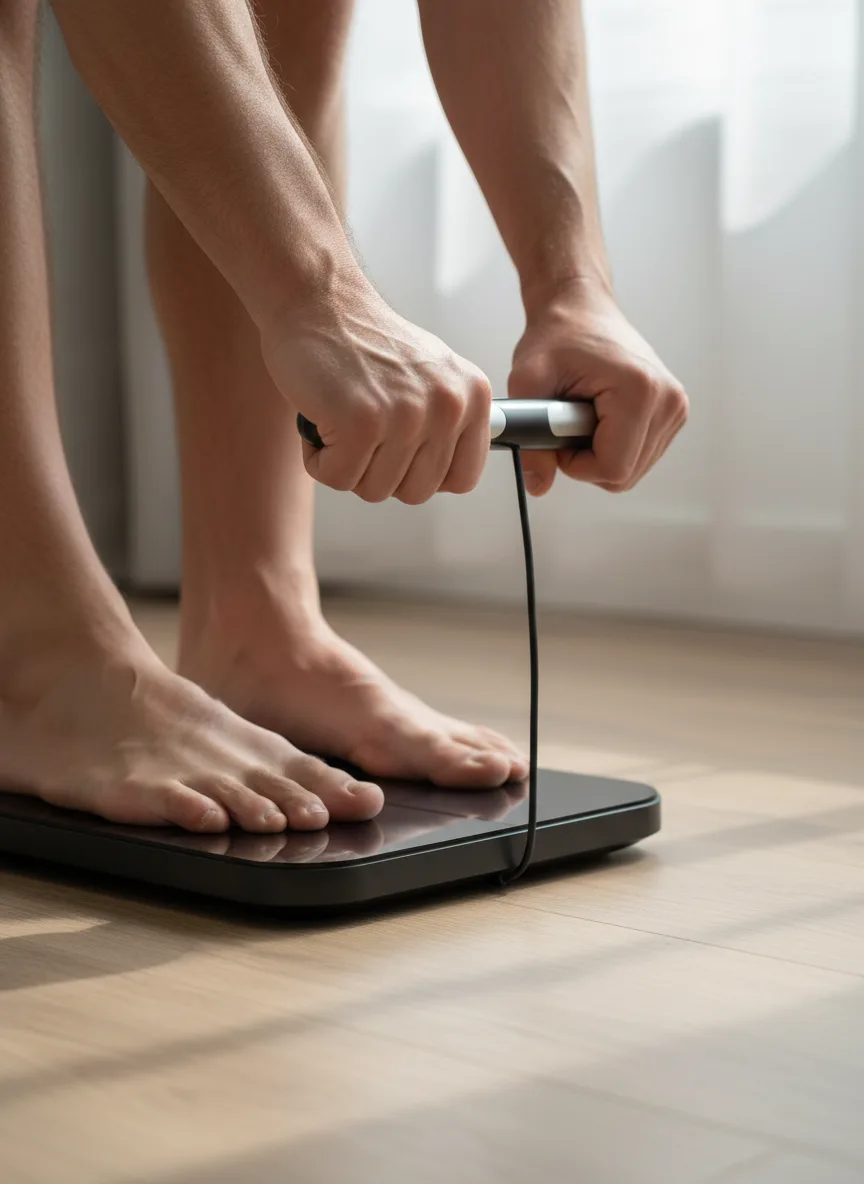
The 40-second morning routine: feet on the electrodes, handle out, done before the coffee.
The segmental view also flagged that my left leg carried noticeably less muscle than my right: an old knee issue I'd been unconsciously protecting. I've since added single-leg work. No basic scale would ever have shown me that.
Weeks 5-6: the app tests my patience
Now the flaws. Twice in eight weeks, a measurement ended in a "data transfer failed" error and I had to redo it. Once, the app took a full day to sync with Apple Health. And the app clearly, persistently wants me to subscribe to Hume Plus. The banners are polite but constant. None of this is disqualifying. All of it is mildly annoying, and you should expect it.
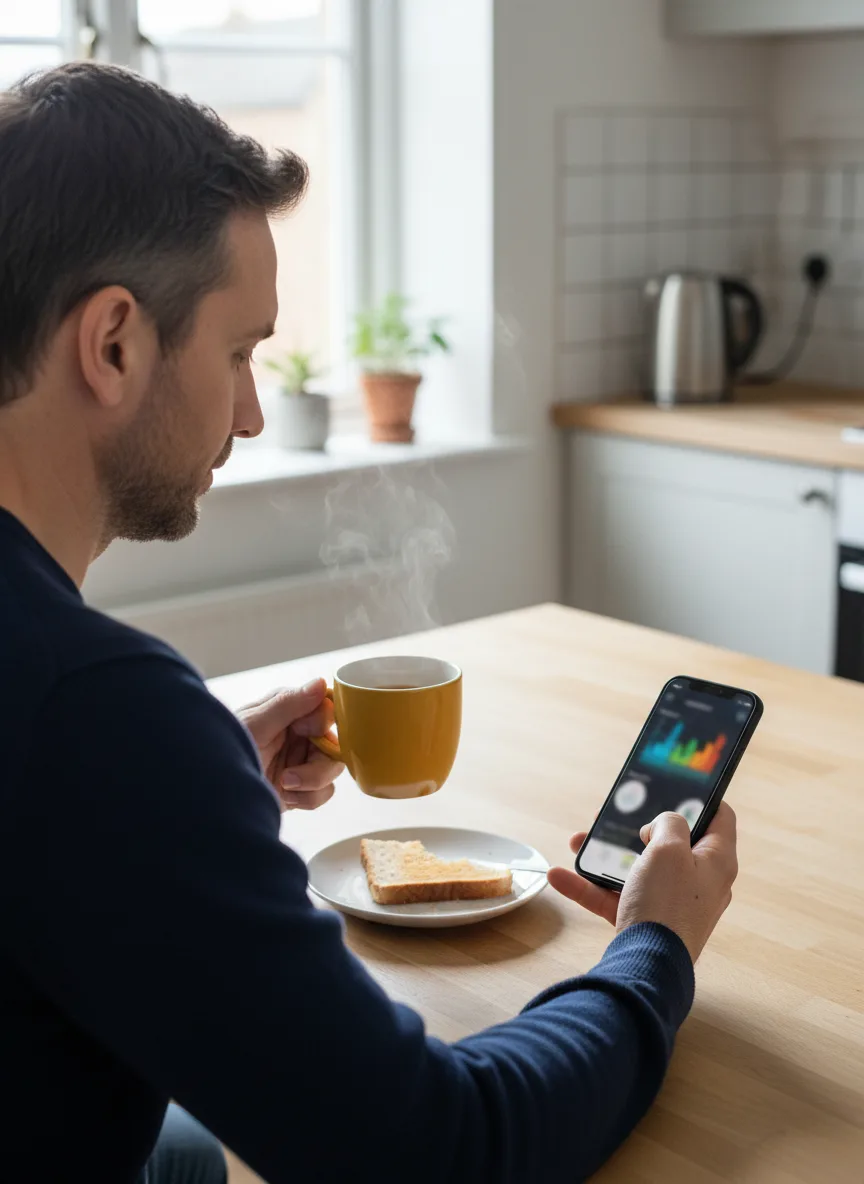
The habit that actually stuck: trends over coffee, not panic over single readings.
Weeks 7-8: settling in
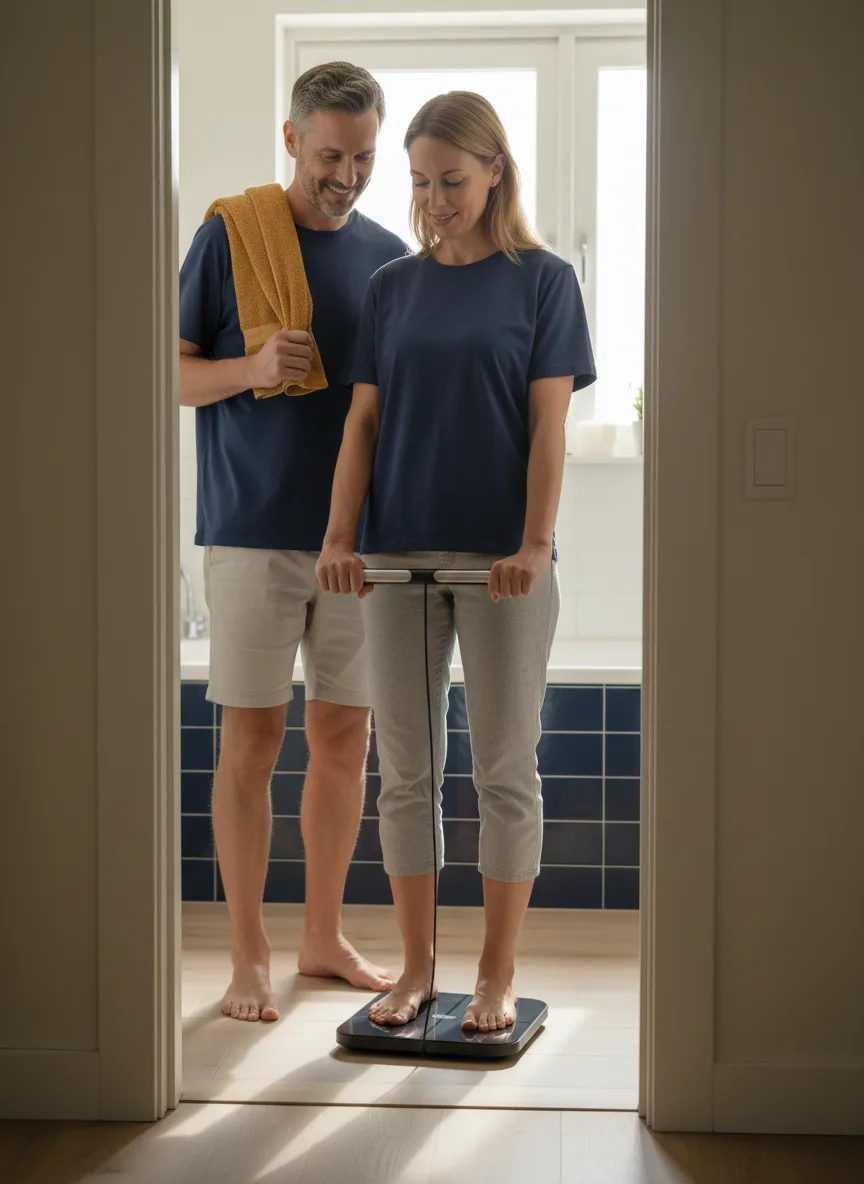
Profile #2 in action. The scale figures out who's who on its own.
By the end, the routine was invisible: step on, grab handle, 40 seconds, done before the kettle boiled. My wife set up profile #2 and the scale identifies each of us automatically. Final tally for me over 8 weeks: −5.8 lb fat, +2.3 lb muscle, weight down just 3.5 lb. On my old scale, that would have looked like two months of mediocre progress. It was actually the best training block I've had in years.
Prices change often, and Hume runs frequent promotions well below list price.
Accuracy: what's real and what's marketing
Hume states the Body Pod delivers results within roughly 3% of a DEXA scan and advertises "98% accuracy." Treat that as a company claim, not an independent clinical finding. Hume's own terms note the device is a wellness tool, not a medical one. Here's the fair picture, based on my testing and how BIA works:
| Metric | How much to trust it | Why |
|---|---|---|
| Weight | Very high | It's a load-cell scale. Matched my calibrated reference within 0.2 lb. |
| Fat & muscle trends (weeks) | High | Consistent-condition readings track direction reliably. This is the device's real job. |
| Any single day's body fat % | Moderate | Hydration, meals, training and time of day move it. Never react to one reading. |
| Metabolic age, bone mass | Low-moderate | Derived estimates. Fun to watch, nothing to plan your life around. |
If you need clinical-grade numbers, for medical reasons or physique competition, get a DEXA scan. I wrote a full breakdown of that trade-off here: Hume Body Pod vs DEXA scan. The one-line version: DEXA wins on precision, the Body Pod wins on frequency, and frequency is what changes behavior.
Pros and cons after 8 weeks
- Handle + 8 electrodes measure your upper body instead of estimating it
- Shows fat vs muscle changes the scale number hides (the killer feature)
- Segmental view caught a real muscle imbalance
- Core metrics free, no forced subscription
- 24 profiles, enough for the whole household
- Syncs with Apple Health, Google Health Connect, Fitbit, Garmin
- 45-day return window and 1-year warranty
- Single readings swing with hydration, so you need a routine
- Occasional app sync failures and Bluetooth hiccups
- Persistent upselling of the Hume Plus subscription inside the app
- "98% accuracy" marketing overpromises what BIA can do
- Costs more than basic smart scales (though far less than InBody)
- Returns require contacting support for authorization first
Price, subscription and guarantee
The list price hovers around $352, but in practice Hume discounts aggressively. I've seen it near $195 during promotions, and I paid a promo price myself. Check the current offer, because paying list price for this device would annoy me on your behalf. If the number is the thing stopping you, I broke down whether it is worth it at that price separately, cost per measurement and all.
The subscription question, clearly: the free app includes weight, body fat, muscle, visceral fat and the other core metrics. Hume Plus (~$8.99-9.99/month or ~$99.99/year) adds AI insights, deeper reports and coaching-style guidance. I used the free tier for six of my eight weeks and didn't feel handicapped. Buy the scale first; decide about Plus later.
Guarantee: 45-day returns (request authorization from support before shipping anything back), 1-year hardware warranty, with a 10-year extended warranty sold separately.
Who should buy it, and who shouldn't
Buy it if:
- You're losing weight and want to make sure it's fat, not muscle. Especially if you're over 40, when muscle loss quietly accelerates
- You're doing body recomposition and the scale number keeps lying to you
- You're on a medically supervised weight-loss program and your clinician wants you tracking composition, not just pounds
- You want one scale for the whole family with private profiles
Skip it if:
- You just want your weight. A $25 scale does that perfectly
- You know you'll fixate on daily fluctuations (this device will feed that anxiety, not cure it)
- You need medically precise numbers for a diagnosis. That's DEXA territory, at a clinic
Frequently asked questions
Is the Hume Body Pod the same thing as the Hume scale?
Yes. Hume Health sells one body composition scale and its official name is the Body Pod, but most people search for it as the Hume scale, the Hume Health scale or the Hume smart scale. They all mean the same device: a smart scale with four electrodes under your feet and four more in a retractable hand grip, which is what lets it measure your upper body instead of estimating it.
Is the Hume Body Pod worth it?
If you're actively changing your body and want evidence it's working beyond the weight number, yes. The segmental analysis is the real differentiator over cheap scales. If you only want weight, save your money. There's a full cost per measurement breakdown if you want the math.
How accurate is the Hume Body Pod?
Weight: excellent. Composition: reliable as a trend under consistent measuring conditions, wobbly reading-to-reading if you're careless about timing and hydration. Hume's "within ~3% of DEXA" figure is the company's own claim, not independent validation.
How accurate is the Hume smart scale compared to a cheap one?
Both use bioelectrical impedance, so neither is a lab instrument. The difference is coverage, not magic. A cheap foot-only scale has four electrodes and sends the signal up one leg and down the other, so everything above your waist is estimated. The Body Pod has eight electrodes including the hand grip, so arms and trunk are actually measured. That matters most if you lift, because arm and trunk muscle is exactly what a foot-only scale guesses at. The comparison against a DEXA scan goes deeper on what BIA can and can't tell you.
Does it require a subscription?
No. Core metrics are free forever. Hume Plus (~$99/year) is optional and adds AI-driven insights and reports. I found the free tier sufficient.
How many people can use it?
Up to 24 profiles, and it auto-recognizes users. My wife and I never once had our data mixed up in 8 weeks.
Is it HSA/FSA eligible?
Hume markets it as HSA/FSA eligible in the US, but plan rules vary, so confirm with your administrator before buying with those funds.
Does it sync with Apple Health, Fitbit or Garmin?
Yes: Apple Health, Google Health Connect, Fitbit and Garmin are all supported. My Apple Health sync worked, with one day-long delay in 8 weeks.
What's the weight limit?
181.4 kg / 400 lb.
Can I use it while pregnant or with a pacemaker?
BIA devices send a small electrical signal through the body, and manufacturers generally advise against use during pregnancy or with implanted medical devices like pacemakers. Ask your doctor first. This is exactly the situation where "wellness gadget" and "medical question" must not be confused.
Final verdict
8 weeks · 56 measurements · 1 verdict: the Body Pod told me the truth my bathroom scale couldn't: that the plan was working. Flaws and all, it stays.
Lab score: 4.5 / 5 · docked half a point for app sync hiccups and the subscription upselling
The Hume Body Pod solved the exact problem I bought it for: it told me the truth when my bathroom scale was telling me a discouraging half-truth. Over eight weeks it turned "why am I even bothering" into "keep going, it's working". That psychological shift is worth more than any single feature.
It is not a lab instrument, the app has rough edges, and the marketing oversells the precision. Buy it with your eyes open: follow a consistent measuring routine, watch trends instead of days, and it becomes one of the most genuinely useful pieces of fitness tech I've tested. I'm keeping mine.
45-day return window applies if it's not for you.
Keep reading
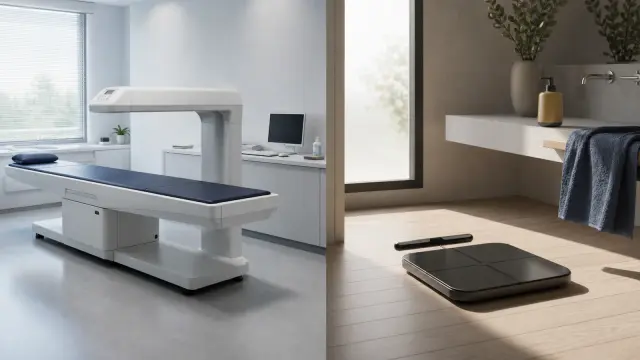 Hume Body Pod vs DEXA Scan: What's the Real Accuracy Difference?
Comparison · 7 min read
Hume Body Pod vs DEXA Scan: What's the Real Accuracy Difference?
Comparison · 7 min read
 Hume Band 2.0 Review: Six Weeks of Day-and-Night Wear. Worth It?
Full review · 11 min read
Hume Band 2.0 Review: Six Weeks of Day-and-Night Wear. Worth It?
Full review · 11 min read
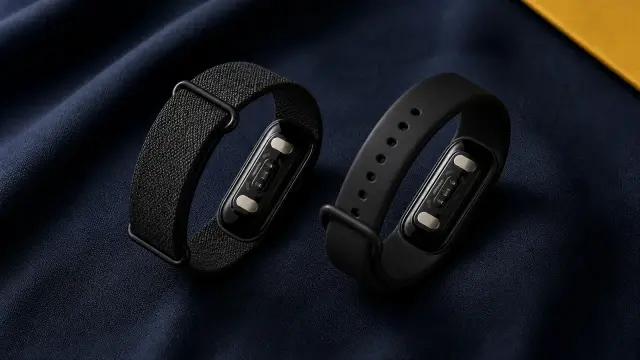 Hume Band vs Whoop: One Difference Decides It for Most People
Comparison · 8 min read
Hume Band vs Whoop: One Difference Decides It for Most People
Comparison · 8 min read
 Is the Hume Body Pod Worth It? Let's Do the Math Nobody Does
Value check · 8 min read
Is the Hume Body Pod Worth It? Let's Do the Math Nobody Does
Value check · 8 min read
- Hume Health official product page and specifications (humehealth.com)
- Hume Health app listings (Apple App Store / Google Play) for Hume Plus pricing
- Hume Health published return and warranty terms
- Testing notes: 8 weeks of daily morning measurements, July-September conditions, single household, free app tier weeks 1-6, Hume Plus trial weeks 7-8.