Hume Band vs Whoop: One Difference Decides It for Most People
The short answer
These two trackers watch the same things: sleep, recovery, heart rate, HRV. The difference that ends up deciding it is the business model. Whoop is a membership: you pay every year, forever, and get the deepest training analytics in the category. The Hume Band 2.0 is a purchase: you buy it once, the core data is free, and a premium tier is optional.
Serious athletes who live in their strain scores should pick Whoop. Most other people, the ones who want to sleep better, recover properly and watch their health trends without a second gym membership on the credit card, get more value from the Hume Band.
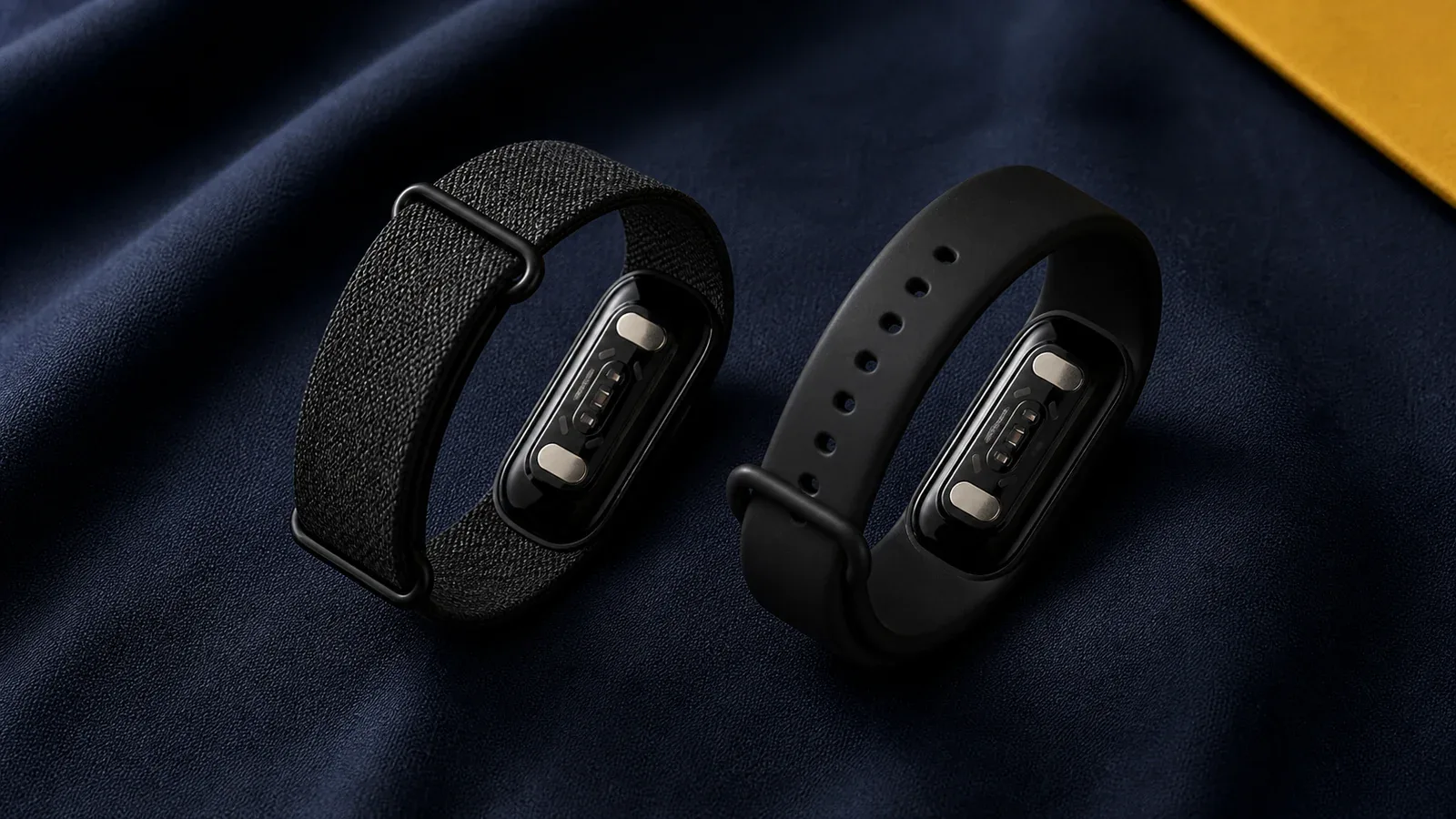
Same idea, different bill: screenless bands that watch your body while you ignore them.
I have spent the last several weeks with a Hume Band 2.0 on my wrist, after years of watching friends preach the gospel of Whoop. Both are screenless. Both are obsessed with recovery. Both promise to tell you things your body is hiding. So why does one of them cost you money every single year?
First, what they both do well
Strip the marketing and these are siblings. Each is a light, screen-free band with optical sensors pressed against your wrist around the clock. Each tracks:
- Heart rate, continuously
- Heart rate variability (HRV), the recovery signal both apps build their scores on
- Sleep, broken into light, deep and REM stages
- Skin temperature and blood oxygen
- Daily strain, activity and movement
Neither has a display, and that is a feature, not a gap. You check the app when you want the data instead of getting notifications on your wrist at dinner. If you want texts and timers, buy a smartwatch and accept the daily charging that comes with it.
The Hume Band adds blood pressure trends, which deserve a careful sentence: these are directional estimates, useful for spotting a drift over weeks. They are not medical readings, and no wrist device replaces a proper cuff.
The difference that matters: the bill
Here is the part most comparison articles bury. Whoop does not really sell you a tracker. It sells a membership that includes one. The hardware is tied to an ongoing subscription that runs roughly $199 to $239 a year depending on the plan, and when you stop paying, the band stops being useful.
The Hume Band flips that. You buy the device once (list price around $356, though Hume discounts constantly and I have seen it near $249). The core app, with sleep, recovery, heart data and trends, is free. There is an optional premium tier with AI-driven insights, but it is genuinely optional. I ran the free tier for my whole test.
Head to head
| Hume Band 2.0 | Whoop | |
|---|---|---|
| Cost model | Buy once, optional premium | Mandatory yearly membership |
| Screen | None, by design | None, by design |
| Battery (advertised) | Up to 14 days | Around 14 days |
| Sleep staging | Light, deep, REM | Light, deep, REM |
| Recovery scoring | Yes, HRV-based | Yes, the category benchmark |
| Training analytics | Good basics | Deepest in class |
| Blood pressure trends | Yes, directional only | No |
| Water resistance | IP68 | Swim-proof |
| Ecosystem | Pairs with the Hume Body Pod for body composition | Whoop app only |
| App maturity | Improving, occasional sync quirks | Polished, years of refinement |
Sleep and recovery in practice
This is what you actually buy either band for, so here is my experience with the Hume side. The Band catches bedtime and wake time on its own, and the morning recovery score matched how I felt more often than not. After a late dinner with wine, the app showed the elevated overnight heart rate and the recovery hit before I had fully admitted the wine to myself. That is the whole pitch of these devices in one sentence: the data confirms what you are pretending not to know.

The job description: work all night, say nothing until morning.
Whoop users get a very similar morning ritual, with one honest difference: Whoop's analytics go deeper. Its strain coaching, journal correlations and team features have had years of refinement, and it shows. The Hume app covers the essentials well and keeps improving, but if you want to correlate your Tuesday intervals with your Thursday HRV across six months, Whoop is still the sharper tool.
Where Whoop wins
- Serious training analytics. Strain scores, workout detection and coaching built for people who train hard and often.
- App polish. Years of iteration, fewer rough edges, strong community features.
- Athlete credibility. If your training partners all wear one, the shared language has real value.
Where the Hume Band wins
- No required subscription. The core product is yours after one purchase. This is the single biggest practical difference.
- Long-run cost. Hundreds of dollars cheaper over a few years, even accounting for promotions on both sides.
- Blood pressure trends. Directional, not medical, but Whoop has nothing comparable.
- The ecosystem play. The Band tracks what your body does; the Hume Body Pod tracks what it is made of. Both feed one app, which is something neither Whoop nor Oura offers.
Frequently asked questions
Whoop vs Hume Band 2.0: which is better?
For deep training analytics, no. For value, everyday health tracking and anyone who resents subscriptions, yes. Both cover the core signals well.
Does the Hume Band need a subscription?
No. Core metrics are free after purchase. A premium tier with AI insights is optional. Whoop's membership, by contrast, is required.
Does the Hume Band track steps?
Yes, along with activity and movement. Just know that both bands treat steps as background data; recovery and sleep are the main event.
Can I shower with the Hume Band?
Yes. It is IP68 rated. Hot water and soap age any strap faster, so taking it off in the shower is a habit worth keeping anyway.
How is the battery life?
Both advertise around 14 days. Expect less in real use on both, and expect neither to become a nightly-charging chore.
Does the Hume Band measure blood pressure?
It shows trends, which is useful for spotting drift over weeks. It is not a medical device, and neither band should guide health decisions without a professional and a real cuff.
Verdict
Same sensors, same screenless idea, one different business model: Whoop for athletes who will use every drop of its analytics. Hume Band for everyone who wants the data without the annual toll.
I like Whoop. It is a genuinely excellent product with the best training analytics you can strap to a wrist. But excellence you rent is a different proposition from competence you own, and for most people the Hume Band's core data covers everything they will actually look at, at a fraction of the multi-year cost. My test unit is staying on my wrist, and the full Hume Band 2.0 review covers those six weeks in detail.
Hume runs frequent promotions below list price. 45-day return window.
Keep reading
 Hume Band 2.0 Review: Six Weeks of Day-and-Night Wear. Worth It?
 Hume Body Pod Review: I Tracked My Body for 8 Weeks. Here's the Truth
 Hume Band vs Oura Ring: Jewelry or Tool?
- Hume Health official Hume Band 2.0 specifications and pricing (humehealth.com)
- Whoop official membership pricing and device specifications (whoop.com), checked July 2026
- Testing notes: several weeks of continuous Hume Band 2.0 wear, free app tier, alongside the Hume Body Pod
- Prices and plans change often; confirm current terms on each official page before buying.