Oxiline vs Hume Body Pod: Which Smart Scale Actually Fits Your Budget?
The short answer
If you want the same 8 point, handles plus feet hardware as the Body Pod for less money, the Oxiline Scale MD Pro is a legitimate pick, and I am not going to pretend otherwise. It measures your torso and arms instead of estimating them, it comes with a lifetime warranty, and there is no subscription anywhere in sight. On hardware alone, it ties the Body Pod.
If you want the app to actually get the number right once it has it, that is where I would pump the brakes on Oxiline. Tom's Guide tested the Scale MD Pro and came away recommending against it, specifically because the app's health guidance did not line up with basic medical reference points. Good sensors feeding a confused app is not a small problem, it is the whole problem.
I have not tested an Oxiline scale. I want that on the record before anything else, because most of the comparisons you will find online blur that line and I do not want to blur it with you. What I have done is spend 8 weeks on the Hume Body Pod, log the good and the bad in my full review, and then go read every spec sheet and third party test of the Oxiline lineup I could find. This article is built on published specifications and independent reviews for Oxiline, and on my own measurements for the Body Pod. Where I am guessing, I will say so.
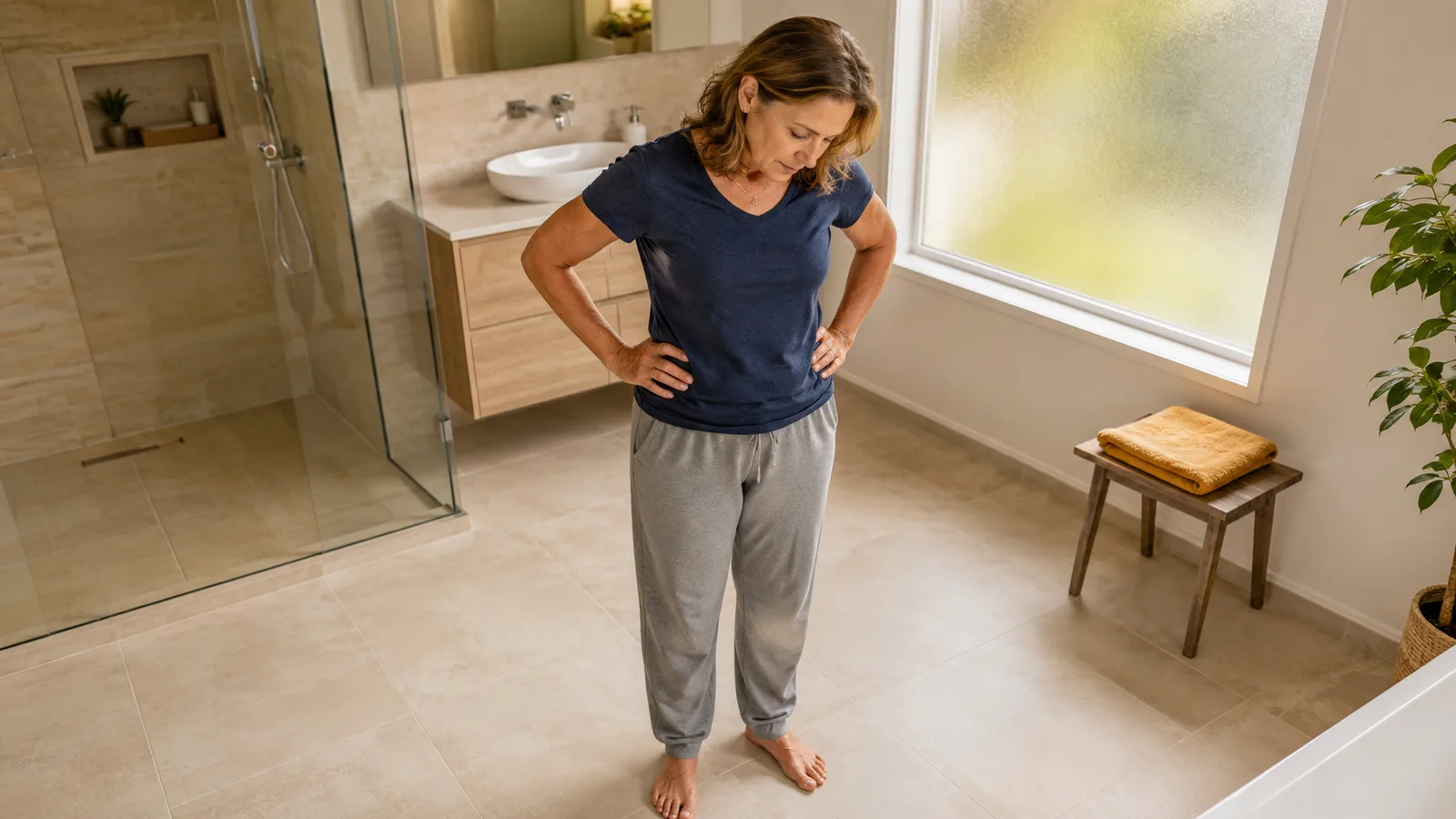
The actual decision: an empty patch of bathroom floor and two scales that measure you the same way.
First, which Oxiline are you actually looking at?
This is the part that trips people up before they even get to the Hume comparison. Oxiline sells two very different scales under names that sound almost interchangeable, and I have seen shoppers compare the wrong one to the Body Pod more than once.
- Scale X Pro: two electrodes, both in the footplate. It estimates everything above your waist from a leg to leg reading. Around $99, with 8 to 16 metrics depending on how you count.
- Scale MD Pro: eight electrodes, including a retractable hand grip. It reads your arms and torso directly, the same basic approach as the Body Pod. Around $179, with roughly 31 metrics.
If a friend tells you "Oxiline is basically the same as Hume for half the price," ask which model they mean. That claim is closer to fair for the MD Pro. It is not fair for the X Pro, which is a foot only scale competing against a very different design.
The hardware round: a tie, and I am not going to pretend otherwise
Here is the side by side, using Oxiline's published specifications and Hume's published specifications alongside what I measured myself on the Body Pod.
| Oxiline Scale X Pro | Oxiline Scale MD Pro | Hume Body Pod | |
|---|---|---|---|
| Electrodes | 2, feet only | 8, with retractable grip | 8, with retractable grip |
| Segmental readout | No | Yes | Yes |
| Metrics tracked | 8 to 16 | About 31 | About 45 |
| Price | About $99 | About $179 | About $229 list, often on promotion near $195 |
| App cost | Free, no subscription | Free, no subscription | Free core app; optional Hume Plus around $99 a year |
| Warranty | Lifetime | Lifetime | 1 year, extended coverage sold separately for 10 years |
| Return window | 30 days | 30 days | 45 days |
| User profiles | Not specified | Not specified | 24 |
Set the X Pro aside for a moment and just look at the MD Pro against the Body Pod. Same basic sensor layout. Same idea of grabbing the handles so current runs through your arms and chest, not just your legs. The Body Pod tracks more metrics and supports more stored profiles, and Hume's app has more going on behind the scenes, which I will get into. But if someone tells you the two scales measure your body in fundamentally different ways, that is not accurate. They do not.
Both brands make an accuracy claim against DEXA scanning, and I want to be clear about what that claim is and is not. Oxiline states under 4.7% deviation from DEXA. Hume states within 3% of DEXA. Neither number comes from an independent clinical study I could locate, they are manufacturer claims, and I am reporting them as exactly that. Treat both the same way: as a marketing figure, not a validated result.
Where they actually differ: the app and the advice it gives
This is the section that actually decides the comparison, in my opinion, because the hardware round was a tie. Tom's Guide put the Oxiline Scale MD Pro through testing and came away recommending against buying it. The specific problem was not the sensors, it was the analysis layered on top of the readings. The app labeled 28% body fat as "high" for a woman. For context, the Harvard Medical School overweight threshold for women sits around 36%. That is not a rounding error, that is the app handing out health guidance that contradicts a standard medical reference point.
I want to be careful here. I have not used the MD Pro's app myself, so I cannot tell you whether that one flagged instance reflects a pattern or a one-off bug. What I can tell you is that Tom's Guide is a mainstream, widely read tech outlet, this was a direct hands-on finding rather than a rumor, and it is exactly the kind of failure that matters more than a metrics count on a spec sheet. A scale that measures your torso correctly but then tells you a normal reading is alarming is arguably worse than a cheaper scale that just estimates and stays quiet about it.

The moment that decides whether you keep a scale: when the app tells you something about your own body that does not sound right.
During my 8 weeks with the Body Pod, I did not run into a comparable misfire. My body fat readings moved from 24.1% up to 26.0% after a single salty dinner, which is a hydration swing, not a health alert, and the app treated it as one, showing the trend rather than panicking about a day of pasta and soy sauce. That is a low bar in one sense, an app that does not cry wolf, but based on the Tom's Guide findings, it is a bar Oxiline's MD Pro app did not clear in at least that one test.
Prices move with frequent promotions, worth a look before you decide either way.
Price, warranty, and what happens when it breaks
This is where I have to give Oxiline real credit, because it would be dishonest not to. Both Oxiline models carry a lifetime warranty. The Body Pod carries 1 year of standard coverage, with a 10 year extended warranty sold as an add-on. If a scale failing on you in year 3 is a real worry, and for a device you step on daily, wear does add up, Oxiline's terms are simply better as written, full stop.
On price, the Scale MD Pro at roughly $179 undercuts the Body Pod's roughly $229 list price. The Body Pod does go on promotion often enough that I have regularly seen it closer to $195, which narrows the gap to something close to what you would pay for the extra metrics and profile slots. But if you catch the Body Pod at full list price, the MD Pro is the cheaper way into handles-based readings, not a marginal amount cheaper. I ran the actual cost per measurement numbers for the Body Pod separately in my breakdown of whether it is worth the money, and that math shifts depending on which price you actually pay.
Return windows favor Hume by 15 days, 45 versus 30, which matters if you need more than a month to decide a scale is working for your routine. Neither of these differences is dramatic on its own. Together, they mean Oxiline is not a downgrade you settle for to save money. It is a genuinely lower-risk purchase on paper, warranty and upfront cost both.
The criticism of the Body Pod I could not verify
In the interest of being straight with you, there is a published claim that the Body Pod has accuracy and consistency problems, specifically for women and for users with lower body fat percentages. I am flagging it as exactly that, a third party claim, not something I have confirmed myself.
My own 8 week test does not reproduce that pattern, but I also cannot rule it out, and here is why: I tested as one user, and my wife's readings on profile #2 have been part of the household data but not a controlled comparison. Neither of us falls into the lower body fat range this criticism is about, and I have not run a test with a sample of women or with lean athletes specifically. So I am not in a position to confirm the claim or to dismiss it. If you are a woman with a low body fat percentage considering this scale, that gap in what I can personally vouch for is worth knowing before you buy, and I would treat it as an open question rather than a settled one in either direction.
I go into the limits of what BIA scales can and cannot measure, including where this kind of population-specific variance tends to come from, in my comparison against actual DEXA scanning.
Which one fits you
| Your situation | Better fit | Why |
|---|---|---|
| Tightest possible budget, feet-only reading is acceptable | Oxiline Scale X Pro | Lowest price point, lifetime warranty, no subscription |
| Want handles-based readings, lifetime warranty matters most, willing to accept app risk | Oxiline Scale MD Pro | Same core hardware as the Body Pod for less money, plus better warranty terms |
| Managing more than one household member's data | Hume Body Pod | 24 stored profiles versus Oxiline's more limited setup |
| Want the deepest metric breakdown and are fine paying more for it | Hume Body Pod | About 45 tracked metrics versus about 31 on the MD Pro |
| App trust and guidance quality is your top priority | Hume Body Pod, provisionally | I found no equivalent published finding against its guidance, though absence of a report is not proof of quality and I have not audited it either |
I put together a wider shortlist, including scales outside this matchup entirely, in my ranking of the best body composition scales, if neither of these two ends up being the right fit.
Frequently asked questions
Is the Oxiline Scale MD Pro better than the Hume Body Pod?
On hardware, they are close to even, both use 8 electrodes with a hand grip. The MD Pro is cheaper and carries a lifetime warranty, which are real advantages. Where it loses ground is software: Tom's Guide tested it and found the app's health guidance inconsistent, including labeling a normal body fat percentage as high for a woman. Whether it is "better" depends on whether you weigh hardware and price more heavily than app reliability.
Is the Oxiline Scale X Pro the same as the MD Pro?
No, and this is the most common mix-up in this comparison. The X Pro has 2 electrodes in the footplate only and estimates upper body composition from leg data. The MD Pro has 8 electrodes plus a retractable hand grip and reads your arms and torso directly. They are priced differently and built differently, so specs quoted for one should not be assumed to apply to the other.
Does the Hume Body Pod require a subscription?
No. The core app is free and includes your body composition readings and trends. Hume Plus is an optional paid tier, around $99 a year, for additional features. Neither Oxiline model requires a subscription of any kind, which is worth factoring in if ongoing cost matters to you.
Which scale has the better warranty?
Oxiline, on both models. Both the X Pro and the MD Pro carry a lifetime warranty. The Body Pod's standard warranty is 1 year, with an additional 10 year extended warranty available for separate purchase.
Can I trust the DEXA accuracy claims from either brand?
Treat both as manufacturer claims rather than independent findings. Oxiline states under 4.7% deviation from DEXA, Hume states within 3%. I was not able to locate independent clinical validation behind either figure, so I would read both as marketing numbers and judge the scales on trend consistency over time instead of a single accuracy percentage.
Should I buy based on hardware alone?
Not in this matchup. The Scale MD Pro and the Body Pod share the same basic electrode setup, so the usual "handles beat feet-only" logic does not separate them. The real difference shows up in app quality, metric count, profile support, and warranty terms, not in the sensors themselves.
Neither scale wins outright, and that is the honest takeaway here. The Oxiline Scale MD Pro matches the Body Pod's core hardware, costs less, and comes with a lifetime warranty that Hume simply does not offer. That is not a small thing to give up. But Tom's Guide's hands-on finding, an app calling a normal body fat reading "high" against Harvard Medical School's own overweight threshold, is a real strike against the software layer that actually turns those electrode readings into advice you act on. My own 8 weeks with the Body Pod did not turn up anything comparable, though I have not verified the separate claim about its accuracy for women and lean users, and I want that gap on the record too. If you are choosing on hardware and cost, the MD Pro is a fair pick. If you are choosing on whether the app tells you the truth about your own numbers, the evidence I could find points toward the Body Pod, provisionally.
Compare it against your own budget and warranty priorities before deciding.
- Oxiline Scale X Pro and Scale MD Pro specifications as published by Oxiline, including electrode count, metrics tracked, pricing, warranty terms, and return window. I have not personally tested either Oxiline model.
- Tom's Guide review of the Oxiline Scale MD Pro, which recommends against purchase and cites inconsistent app analysis, including a 28% body fat reading for a woman labeled "high" by the app.
- Harvard Medical School reference range placing the overweight threshold for women's body fat percentage at approximately 36%, used here for context against the Tom's Guide finding.
- Hume Body Pod specifications as published by Hume, including electrode count, metrics tracked, pricing, warranty terms, return window, and profile limit.
- Alex Carter's personal 8 week test of the Hume Body Pod, including measured changes of negative 5.8 lb fat and positive 2.3 lb muscle against a 3.5 lb total weight change, a same-day reading shift from 24.1% to 26.0% body fat after a high-sodium meal, and a left leg muscle balance alert linked to a pre-existing knee issue. Full details in the linked review.
- A separate, unverified third-party claim describing accuracy and consistency issues with the Hume Body Pod for women and users with low body fat percentages. Reported here as a claim only, not confirmed by this site's own testing.
- DEXA deviation claims (under 4.7% for Oxiline, within 3% for Hume) are manufacturer-stated figures. No independent clinical study behind either claim was located at the time of writing.
Keep reading
 Hume Body Pod Review: I Tracked My Body for 8 Weeks. Here's the Truth
Full review · 12 min read
Hume Body Pod Review: I Tracked My Body for 8 Weeks. Here's the Truth
Full review · 12 min read
 Hume Body Pod vs InBody, Withings and Renpho: The Three Fights That Matter
Comparison · 10 min read
Hume Body Pod vs InBody, Withings and Renpho: The Three Fights That Matter
Comparison · 10 min read
 The Best Body Composition Scales of 2026, Ranked Honestly
Buying guide · 11 min read
The Best Body Composition Scales of 2026, Ranked Honestly
Buying guide · 11 min read
 Is the Hume Body Pod Worth It? Let's Do the Math Nobody Does
Value check · 8 min read
Is the Hume Body Pod Worth It? Let's Do the Math Nobody Does
Value check · 8 min read