Hume Body Pod vs DEXA Scan: What's the Real Accuracy Difference?
The short answer
DEXA is more accurate. The Body Pod is more useful, more often. A DEXA scan is the clinical reference standard. But you'll do it maybe twice a year, at $40-$150 a visit. The Hume Body Pod is less precise on any single reading, but it's standing in your bathroom every morning, free after purchase, showing you the trend DEXA can't see between appointments.
If you need one clinically exact snapshot, book a DEXA. If you need to know whether this month's effort is losing fat or losing muscle, the Body Pod is the tool that actually changes what you do.
"Is it as accurate as a DEXA?" is the first question everyone asks about the Hume Body Pod. I asked it too, before spending eight weeks with one. It's also slightly the wrong question. Here's the honest comparison, method by method, dollar by dollar.
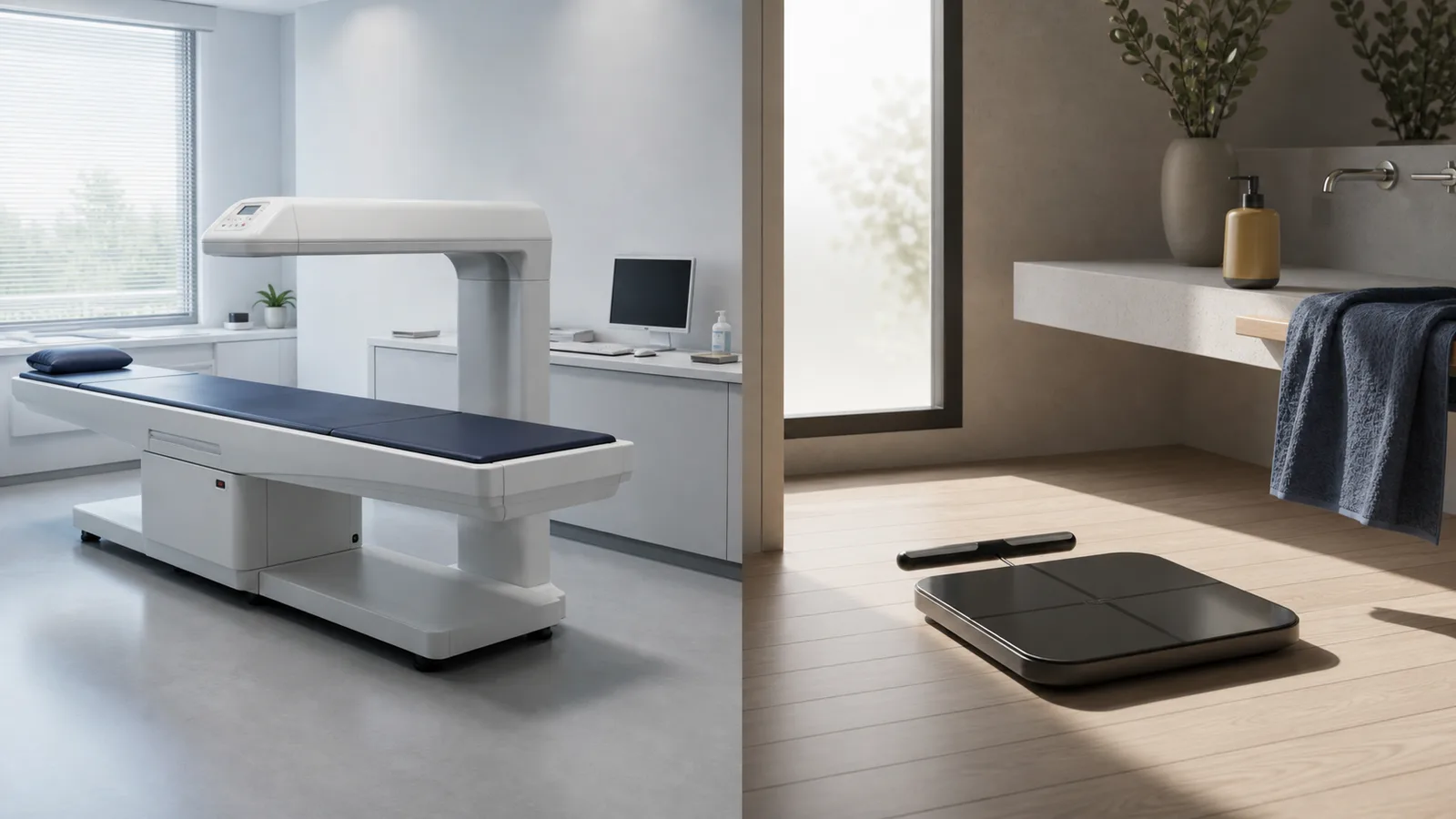
Two ways to measure the same body: the clinic's snapshot and the bathroom's trend line.
Two completely different ways of measuring you
DEXA (dual-energy X-ray absorptiometry) passes two low-dose X-ray beams through your body while you lie on a table for about 7-10 minutes. Because fat, lean tissue and bone absorb the beams differently, it directly maps where each tissue is. It's the standard used in research and medicine, it also measures bone density, and the radiation dose is tiny (roughly a day of natural background exposure). You need an appointment at a clinic, gym chain or imaging center.
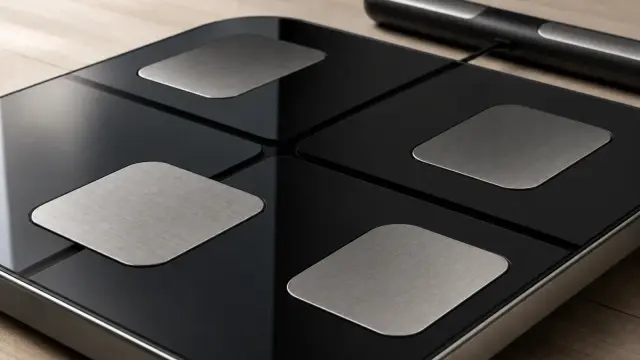
The Hume Body Pod uses segmental multi-frequency bioelectrical impedance (BIA): a harmless electrical signal travels between eight electrodes, four under your feet and four in the retractable hand grip, and the resistance it meets is converted into estimates of fat, muscle and water for each body segment. A reading takes under a minute, at home, as often as you like. I covered the full experience in my 8-week Hume Body Pod review.
One measures tissue directly. One estimates it through your body water. That single difference explains everything else in this comparison.
Head to head
| DEXA Scan | Hume Body Pod | |
|---|---|---|
| Single-reading accuracy | Reference standard | Good estimate; varies with hydration & timing |
| Trend tracking | Poor: snapshots months apart | Excellent: daily/weekly curve |
| Cost | $40-$150 per scan | One-time purchase (~$195-$352), unlimited scans |
| Convenience | Appointment, travel, table time | 60 seconds in your bathroom |
| Bone density | Yes, medically meaningful | Rough estimate only |
| Segmental fat/muscle | Yes, precise | Yes, estimated (arms, legs, trunk) |
| Visceral fat | Measured | Estimated rating |
| Who reads the result | Technician/report | You, in the app (syncs to Apple Health, Garmin, Fitbit) |
| Medical use | Yes | No, wellness device |
About that "within 3% of DEXA" claim
Hume advertises that the Body Pod reads within roughly 3% of DEXA and cites "98% accuracy." I'll say here what I said in the full review: that's the company's own figure, not independent clinical validation, and Hume's own terms describe the device as a wellness tool rather than a medical instrument.
Is the claim plausible? Under ideal, consistent conditions, good segmental BIA devices can land reasonably close to DEXA for many people. But BIA accuracy varies person to person: hydration level, recent meals, training, even foot calluses play a role. Some users will see their Body Pod track DEXA closely; others will see a consistent offset of several percentage points.
The math nobody does: cost per data point
Say you're serious and DEXA-scan every three months at $80 a visit. That's four data points a year for $320, and a whole quarter can go sideways between points. The Body Pod at a promotional price costs less than one year of that, and gives you 365 data points if you want them.
More data points don't just save money. They change behavior. A bad DEXA result three months from now can't warn you that this month's aggressive cut is burning muscle. A weekly trend line can, while there's still time to fix it by adjusting protein or training. That feedback loop, not raw precision, is why I ended up keeping the Body Pod after testing.
Frequent promotions run well below the $352 list price. 45-day returns.
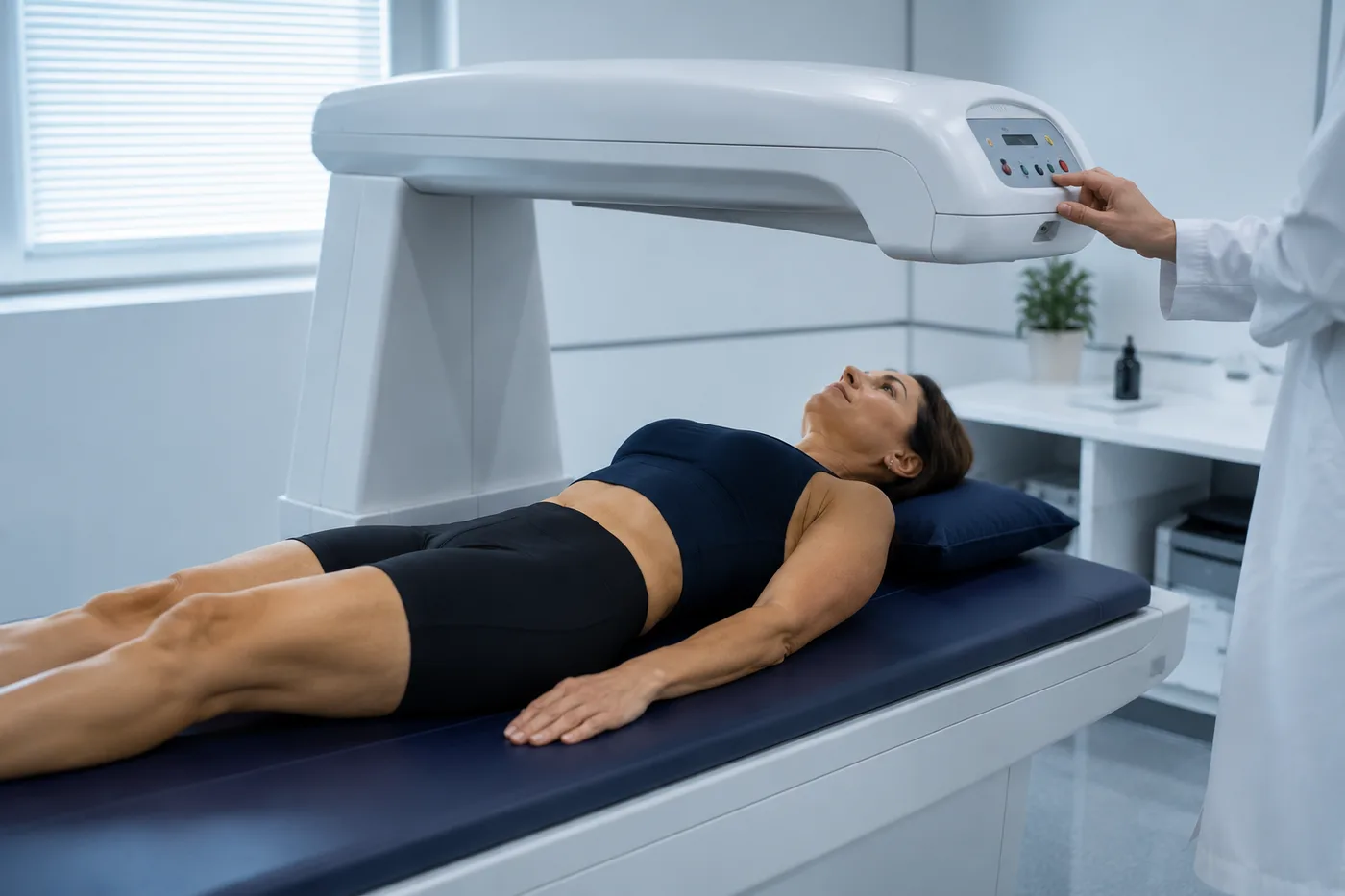
A DEXA scan takes about ten minutes on the table, plus the appointment around it.
When DEXA is the right choice
- Medical contexts. Your doctor needs real numbers: bone density, precise visceral fat, sarcopenia screening. No home device belongs in that conversation.
- A true baseline. One scan tells you where you honestly stand, and calibrates any home device you use afterwards.
- Competition prep. Physique athletes who need exact percentages shouldn't guess with BIA.
When the Body Pod is the right choice
- Ongoing fat-loss or recomposition tracking. The weekly trend is the metric that keeps you honest and motivated.
- Protecting muscle while losing weight, especially over 40, or on a medically supervised weight-loss program where preserving lean mass matters. A quarterly DEXA finds out too late; a weekly trend flags it in days.
- Households. Up to 24 profiles; a DEXA for a family of four, four times a year, costs more than a used car's insurance.
- Anyone who won't actually book the scans. Be honest: the best measurement is the one you'll take. The Pod removes every excuse.
The smart play: use both
This isn't really a versus. The setup I'd recommend to a friend: one DEXA scan now for a calibrated baseline (and again yearly if budget allows), plus the Body Pod for the daily and weekly reality in between, measured every morning under the same conditions: after the bathroom, before coffee, barefoot. The DEXA gives you the true starting point. The Pod tells you, week by week, whether the plan is working.
Frequently asked questions
Is the Hume Body Pod as accurate as a DEXA scan?
No. DEXA is the reference standard and measures tissue directly. The Body Pod estimates composition via BIA, so single readings vary with hydration and timing. Under consistent conditions its trend tracking is reliable, and that's the job it's actually built for.
Can the Body Pod replace DEXA entirely?
For routine progress tracking, yes. For medical assessment, bone density, or research-grade precision, no. Many users combine an occasional DEXA with daily Pod readings, the best of both.
Why is my Body Pod's body fat % different from my DEXA result?
Different measurement physics. A stable offset between the two is normal. Note it once and read your Pod numbers through that lens. The direction of change over weeks is what matters.
How often can I do a DEXA scan safely?
The radiation dose is very low, and clinics commonly scan clients quarterly. But frequency isn't the constraint in practice; cost and scheduling are. Ask the imaging provider and your doctor about what's appropriate for you.
Bottom line
The math: 4 DEXA visits/year ≈ $320 for 4 data points. One Body Pod ≈ one year of that, for 365. Precision is DEXA's crown, but the trend is what changes your behavior.
DEXA answers "what am I, exactly, today?" The Hume Body Pod answers "is what I'm doing actually working?", every single week, for a one-time price. Most people asking this question don't need a laboratory. They need a trustworthy trend and the motivation it creates. That's the Body Pod's game, and after eight weeks of testing, it plays it well.
Keep reading
 Hume Body Pod Review: I Tracked My Body for 8 Weeks. Here's the Truth
 The Best Body Composition Scales of 2026, Ranked Honestly
 Hume Body Pod vs InBody, Withings and Renpho: The Three Fights That Matter
- Hume Health official Body Pod specifications and accuracy statements (humehealth.com)
- Typical US DEXA body-composition pricing from imaging providers ($40-$150 per scan; varies by city and provider)
- General BIA vs DEXA methodology literature on measurement variability with hydration and timing
- Testing notes: 8 weeks of daily Body Pod measurements under fixed morning conditions.