Hume Body Pod vs InBody, Withings and Renpho: The Three Fights That Matter
The short answer
Against the Withings Body Scan, the Hume Body Pod wins on price and family features; Withings wins if you want the six-lead ECG and a more mature app. Against the InBody Dial H30, the Pod matches the sensor method for less money; InBody wins only if clinic continuity matters to you. Against Renpho, it is not really a fight: hand electrodes measure your upper body, foot-only scales guess it.
The pattern across all three matchups is the same. The Pod delivers the hardware that defines the category, eight electrodes with segmental analysis, at the lowest real-world price of the segmental group. A rival has to earn the difference with something specific, and two of them sometimes do.
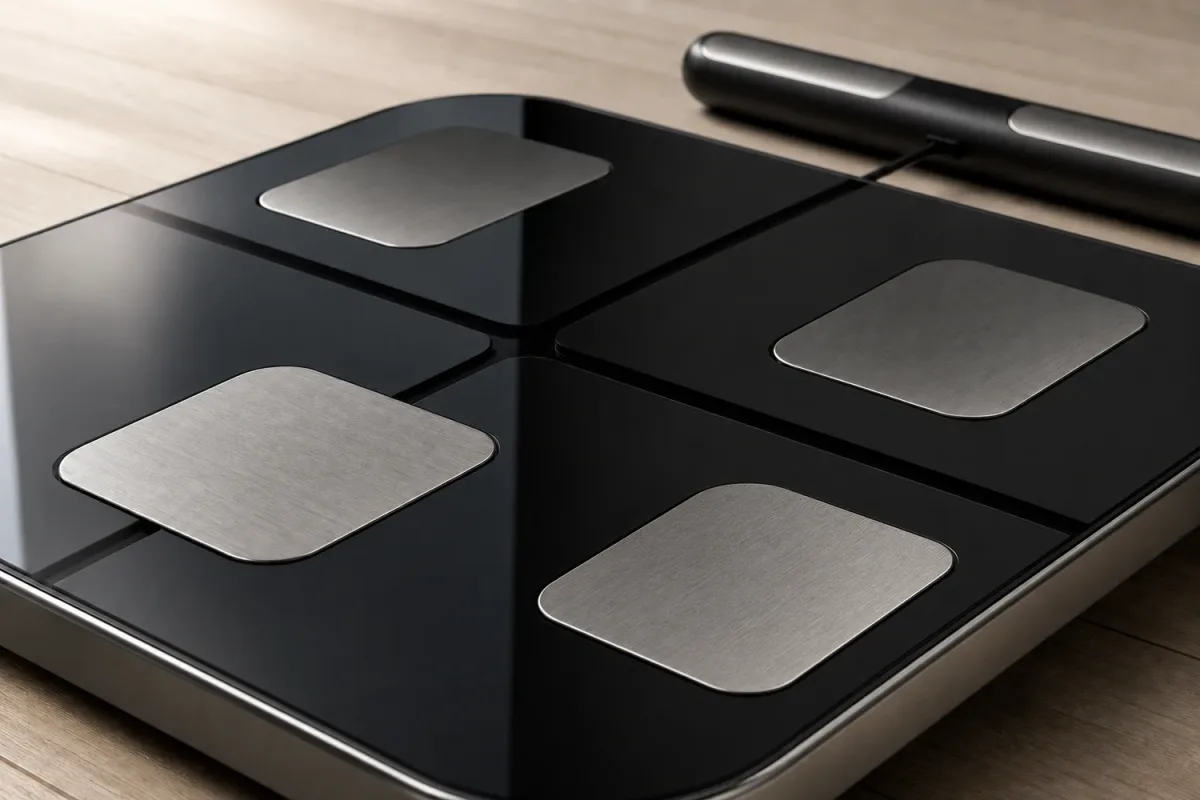
The dividing line of the whole category: electrodes you stand on estimate, electrodes you hold measure.
Nobody cross-shops four scales at once. By the time readers email me, the shortlist is down to two: the Hume Body Pod and one specific rival. So instead of another ranked list (I already wrote that one), this article settles each matchup on its own terms. Pod vs Withings. Pod vs InBody. Pod vs Renpho. Three different fights, three different answers. If the rival on your shortlist is Oxiline instead, that one gets its own article: Oxiline vs Hume Body Pod.
Ground rules: same physics, different bills
Every scale here uses bioelectrical impedance analysis, BIA. A tiny current runs through your body, the scale measures the resistance, and an algorithm turns that into fat, muscle and water estimates. Muscle conducts, fat resists. That physics is shared, which means no scale in this article is magically more truthful than the others. What actually separates them is three things:
- Where the electrodes are. Hand plus foot electrodes measure your arms, legs and trunk separately. Foot-only scales measure your legs and extrapolate the rest of you.
- What you pay after the purchase. Free apps, optional tiers, or features that quietly migrate behind a subscription.
- Whether the app respects you. Profiles, integrations, and data you can actually export.
Honesty about my testing, because it shapes everything below: the Pod is the scale I lived with for eight weeks, documented in the full review. The other three I have compared on sensor hardware, official specs, app policies and aggregated owner feedback, not weeks in my bathroom. When my experience only covers one side of a fight, I say so.
Fight 1: Hume Body Pod vs Withings Body Scan
This is the real fight, and the only one I would call close. The Body Scan is the flagship of the most established brand in connected scales, and like the Pod it does true segmental analysis through a pull-up handle. On the core question, what is my body made of, these two take the same kind of measurement with the same kind of hardware.
Withings then adds things the Pod does not attempt: a six-lead ECG reading, nerve activity scoring through the feet, and an app polished by more than a decade of iteration. Its record on long-term software support is about the best in the category, and if you plan to keep a scale for six or seven years, that record has value.
So why does the Pod win this fight for most people? The bill, twice over. First the sticker: the Body Scan typically lists around $399 while the Pod's street price runs far below its $352 list, often closer to half. Second the subscription: some of the Body Scan's most interesting health features route you toward Withings+, while the Pod's core app, with segmental data, trends and about 45 metrics, stays free. Add the household angle, up to 24 profiles with automatic recognition against Withings' 8, and the Pod is simply more scale per dollar.
Fight 2: Hume Body Pod vs InBody Dial H30
InBody makes the professional machines you have stood on at gyms, clinics and physical therapy offices, and the Dial H30 brings that same hand-plus-foot method home. The pedigree is real, not marketing. If a brand's clinical reputation is what lets you finally trust a number, that is worth something.
Method for method, though, the two scales do the same job: current through hands and feet, segmental readout, trend over time. The differences sit around the measurement, not in it. The H30 usually sells above the Pod's street price. Its app leans clinical, closer to a report than a coach, and its household features are thinner: fewer profiles, less automatic recognition, fewer third-party integrations. The Pod syncs with Apple Health, Google Health Connect, Fitbit and Garmin, and it is built for a family to share, which is the use case where I watched it earn its spot (my wife runs profile #2 and the scale has never once confused us).
There is one buyer for whom InBody is the right call, and I want to be fair to them: if your trainer or clinic already tracks you on InBody machines, keeping your home readings in the same family means your numbers speak the same dialect. BIA results are not interchangeable across brands, so continuity has real diagnostic-conversation value.
Fight 3: Hume Body Pod vs Renpho
I will not pretend this is a fair fight, because it is not even the same weight class. A budget Renpho costs $25 to $40. The Pod costs several times that even on a deep promotion. What you are really choosing here is not a brand but a category: foot-only estimation versus segmental measurement.
Here is what the Renpho does well, and it deserves the credit: it weighs you accurately, its app is serviceable, it syncs with the big health platforms, and it asks for no subscription. As a weight-trend device, it is arguably the best value in the entire smart scale world.
But its four electrodes never touch your hands. Everything it reports about your upper body is extrapolated from your legs and an algorithm's assumptions about where people like you store fat. During a fat-loss phase, that distinction stops being academic: the question you actually care about is whether the weight leaving is fat or muscle, and a foot-only scale answers it with a shrug. When my own recomposition stretch showed up as flat weight, it was the segmental data (fat down 5.8 pounds, muscle up 2.3) that told me the plan was working. A foot-only scale would have shown me a stuck number and called it a day.
All four, side by side
| Hume Body Pod | Withings Body Scan | InBody Dial H30 | Renpho (budget) | |
|---|---|---|---|---|
| Electrodes | 8 (hands + feet) | Handle + feet | Hands + feet | 4 (feet only) |
| Segmental analysis | Yes | Yes | Yes | No |
| ECG | No | Yes, 6-lead | No | No |
| Typical price | ~$195-352 | ~$399 | ~$300+ | ~$25-40 |
| Subscription | Optional | Optional, pushed | No | No |
| Profiles | Up to 24, auto-recognition | Up to 8 | Fewer, thinner sharing | Unlimited basic |
| Integrations | Apple, Google, Fitbit, Garmin | Broad, mature | Limited | Broad basics |
| Strongest argument | Segmental hardware at the lowest price | Health extras + app maturity | Clinical continuity | Price |
Prices are approximate street prices at the time of writing and change constantly. Always confirm on the official page.
Which one fits you
- You are managing fat loss or recomposition and want the fat-versus-muscle answer. Hume Body Pod. Segmental data, free core app, and the best price at which that combination exists.
- You want one premium device covering composition plus heart extras. Withings Body Scan, with the subscription caveat read carefully first.
- Your gym or clinic already speaks InBody. InBody Dial H30, for the continuity alone.
- You want a weight trend and change from a fifty. Renpho, with clear eyes about what the composition numbers are.
Frequently asked questions
Is the Hume Body Pod better than the InBody Dial H30?
Same measurement method, so it comes down to everything around it: the Pod is usually cheaper, supports more profiles and syncs with more apps. InBody wins if you want continuity with the machines your gym or clinic uses.
Is the Withings Body Scan more accurate than the Hume Body Pod?
Both are segmental BIA scales, and neither is a lab instrument. The Body Scan adds an ECG and other health features, but for body composition itself the measurement approach is the same. Consistency of routine matters more than the badge on the glass.
Is a Renpho scale as good as a Hume Body Pod?
For weight, yes. For body composition, no: foot-only scales estimate your upper body instead of measuring it. Whether that gap matters depends on whether the fat-versus-muscle question drives your decisions.
Do any of these scales require a subscription?
No. All four work without one. The Pod and the Body Scan sell optional premium tiers, and Withings pushes its harder. Check what each free tier includes before you buy; it changes.
Which body composition scale is most accurate for home use?
The segmental group (Pod, Body Scan, Dial H30) produces more complete data than any foot-only scale. Between those three, conditions and consistency will affect your numbers more than the choice of brand.
Can any of these replace a DEXA scan?
No, and be suspicious of anyone who says otherwise. DEXA is the clinical reference; home scales trade some precision for daily frequency. Their superpower is the daily trend rather than any single reading.
Verdict
The segmental scales all take the same measurement: current through hands and feet, arms and trunk measured instead of guessed. The Pod does it at the lowest real price with the most generous free app, so each rival needs one specific reason to beat it. Withings has the ECG. InBody has the clinic. Renpho has the price tag, and a different job entirely.
After eight weeks with the Pod and a long, honest look at the other three spec sheets, my conclusion is boring in the best way: the fights are decided by fit, not quality. None of these is a bad product. But if you start from the question that probably brought you here, whether the weight you are losing is fat or muscle, the Pod answers it with the right hardware at the friendliest price, and that is why it is still the one in my bathroom. The cost-per-measurement math is where I stress-tested that conclusion.
Hume runs frequent promotions below list price. 45-day return window.
Keep reading
 Hume Body Pod Review: I Tracked My Body for 8 Weeks. Here's the Truth
 The Best Body Composition Scales of 2026, Ranked Honestly
 Is the Hume Body Pod Worth It? Let's Do the Math Nobody Does
- Hume Body Pod: 8 weeks of hands-on daily testing (full methodology in the review)
- Withings, InBody and Renpho: official specification pages, app store listings and aggregated owner feedback, checked July 2026
- Prices are approximate street prices at publication and change frequently; confirm current terms on each official page
- We hold an affiliate relationship with Hume only; no other brand in this comparison pays us anything, and none saw this article before publication.