Losing Inches but Not Weight? Relax. It's Usually Working.
The short answer
Looser clothes with a stubborn scale usually means fat is leaving while something heavier stays: new muscle from training, or routine water shifts from sodium, workouts, stress or hormones. Muscle is denser than fat, so trading one for the other shrinks you without moving the number.
This is called body recomposition, and it is the good outcome. The scale is not stuck; it is measuring the wrong thing. Confirm it with a tape measure and a composition trend, then keep doing what you are doing.
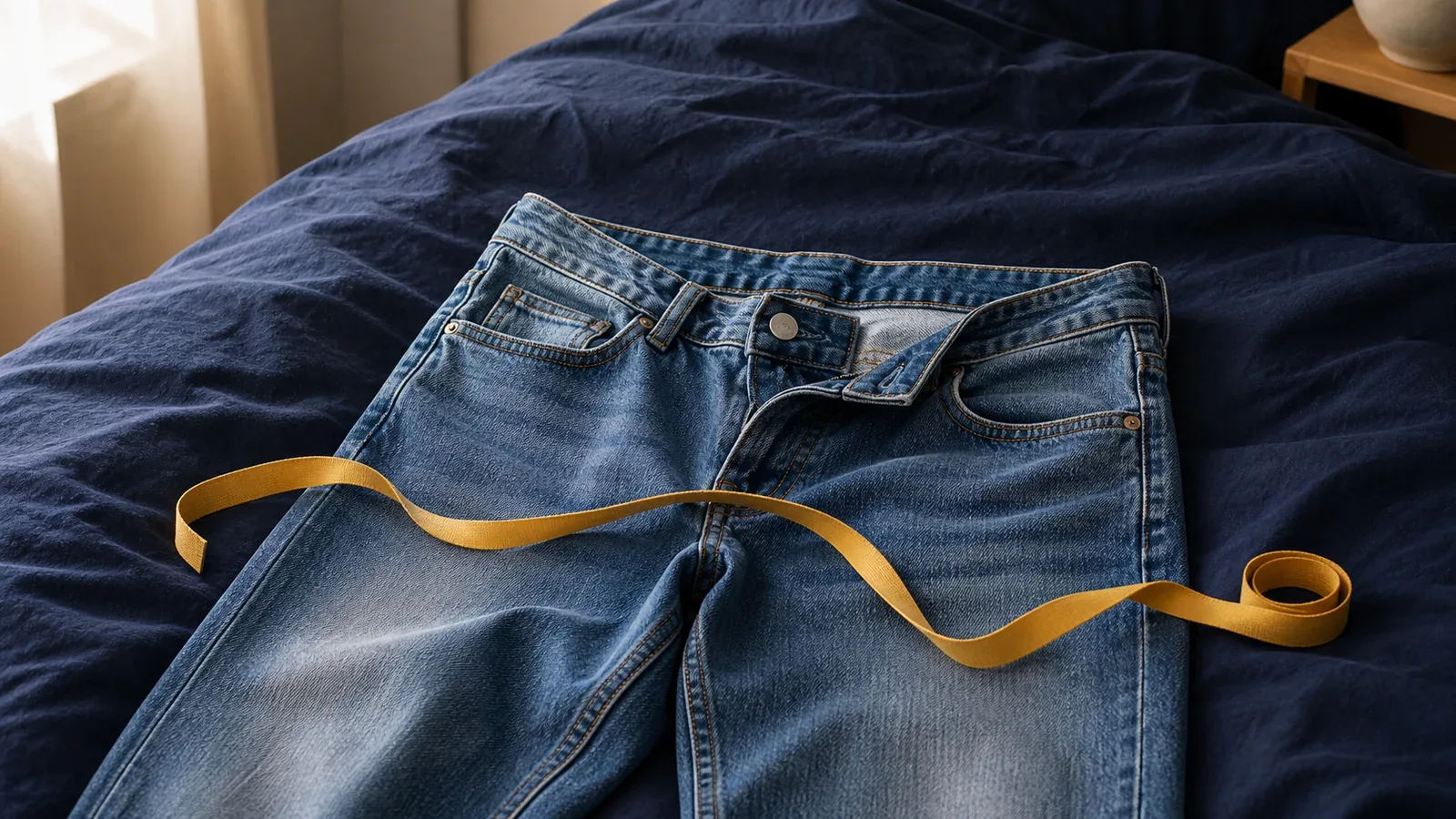
Exhibit A in the case against your bathroom scale: the jeans already know.
Somebody in your life has lived this exact frustration: six weeks of honest effort, the jeans sliding on easier every Monday, and a bathroom scale that reports the whole campaign as a rounding error. I lived it myself, and the resolution taught me more about measurement than any spec sheet ever has. Spoiler: the jeans were right, the scale was technically right, and I was reading the wrong instrument.
The evidence hierarchy: your jeans outrank your scale
Here is a ranking worth taping to the bathroom mirror. When they disagree, trust them in this order: body composition trends first, tape measurements and how clothes fit second, the mirror third, and the scale's daily number last. Not because the scale lies about weight, but because weight is a total that mixes fat, muscle, water, glycogen and lunch into one number, then tells you nothing about the mix. Inches, by contrast, mostly track volume, and fat is voluminous. When inches fall, volume is leaving. The interesting question is why the weight is not following.
Three reasons the scale stalls while inches fall
- You built muscle under the fat you lost. Muscle is denser than fat, packing more weight into less space. Swap a pound of fat for a pound of muscle and you get smaller, firmer and stronger while the scale registers precisely nothing. This is the classic recomposition pattern, common in returning exercisers and anyone who added protein plus lifting to a moderate deficit.
- Water is masking the loss. Two to four pounds of water swing is a normal week: sodium, hard training (muscles hold water to repair), stress hormones, and menstrual cycles all shift it. Fat can leave at a steady pace underneath a water blanket that hides it for weeks.
- The timeline is just short. Fat loss at a sustainable pace is roughly a pound or so a week for many people. Two weeks of that sits within the daily noise of water and digestion. The signal is there; it has not cleared the static yet.
Recomposition: the win your scale cannot see
My own numbers, from the eight weeks I documented in the Hume Body Pod review: total weight down just 3.5 pounds, which my old scale presented as two mediocre months. The composition data told the real story: 5.8 pounds of fat gone, 2.3 pounds of muscle gained, and a belt two notches tighter. Same body, same weeks, opposite verdicts, and only one instrument caught the truth.
That is recomposition: fat leaving while muscle arrives, netting out to a scale number that barely moves. It is not rare and it is not a stall. It is arguably the best-case outcome of a training block, and the people most likely to achieve it, beginners, returners, and the consistent-but-patient, are exactly the people most likely to quit because the scale called their success a failure.
How to confirm it's working (three signals, one morning a week)
- The tape. Waist at the navel, consistent protocol, weekly. Falling inches are the ground truth of volume. The full protocol lives in the visceral fat guide.
- The composition trend. A segmental scale separates the fat line from the muscle line, turning "weight is flat" into "fat down, muscle up," which is the entire answer to this article's question. Consistent morning conditions, weekly averages, trends over decimals.
- Strength and clothes. Lifts holding or rising plus clothes loosening corroborate the happy verdict. Falling strength with shrinking limbs points to the unhappy version, which deserves its own article and got one.
The scale that told me my "stall" was 5.8 lb of fat loss. Trends, not gospel.
When it's actually a plateau
Honesty section: sometimes the scale is flat because everything is flat. The true-plateau signature is inches flat, strength flat, composition flat, four to six weeks running. That is real information too, and the usual suspects are portions that drifted upward, activity that drifted downward, or a body that adapted to the same routine. The response is adjustment, not despair: recount the calories you stopped counting, add a progression to the training, check the sleep. And if you are on a medically supervised program, bring the trends to your clinician; that conversation is what tracking during medical weight loss is for.
Frequently asked questions
Why am I losing inches but not weight?
Fat out, muscle or water in, netting to a flat total. Muscle density means recomposition shrinks you without lightening you. Usually good news.
Can you lose fat without losing weight?
Yes: recomposition. Fat down, muscle up, scale asleep. Composition tracking or a tape makes it visible.
How long can a "fake stall" last?
Weeks. Water masks fat loss routinely. If inches or composition keep improving, ignore the scale; four to six weeks of everything flat suggests a real plateau.
Should I just stop weighing myself?
Demote it, don't fire it. Weekly averages alongside tape and composition are useful; single-morning verdicts are not.
Bottom line
Inches are evidence; a flat scale is an alibi. When clothes loosen and the number won't budge, the plan is usually working exactly as designed, and the only instrument in the house saying otherwise is the one measuring the wrong thing.
Six weeks of believing my scale over my belt cost me nothing but morale, and it nearly cost me the habit that was quietly working. If your jeans are telling you a better story than your scale, congratulations: you are probably the success story in the room. Get the instrument that can prove it, and let the scale keep its one small job: the total, weekly, without editorial authority.
Keep reading
 Losing Fat vs Losing Muscle: How to Tell Which One Is Leaving
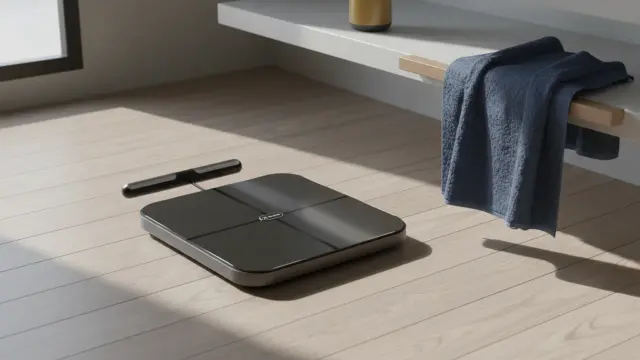 Hume Body Pod Review: I Tracked My Body for 8 Weeks. Here's the Truth
- Muscle vs fat tissue density and recomposition patterns: general exercise-science consensus
- Typical water-weight fluctuation ranges as commonly cited in nutrition coaching literature
- Personal data: 8-week Hume Body Pod test (weight −3.5 lb; fat −5.8 lb; muscle +2.3 lb), methodology in the full review